
British White Cattle Society sees increase in new herds

Updated: Aug 22

With the resurgence of mixed farming practices, grazing agreements, and environment-focused subsidies being undertaken by many, several native British breeds have been experiencing fresh enthusiasm for the grass-based traits they can offer.
The British White Cattle Society has recently seen an uptick in enquiries, with a strong increase in the number of animals being sourced for new herds.
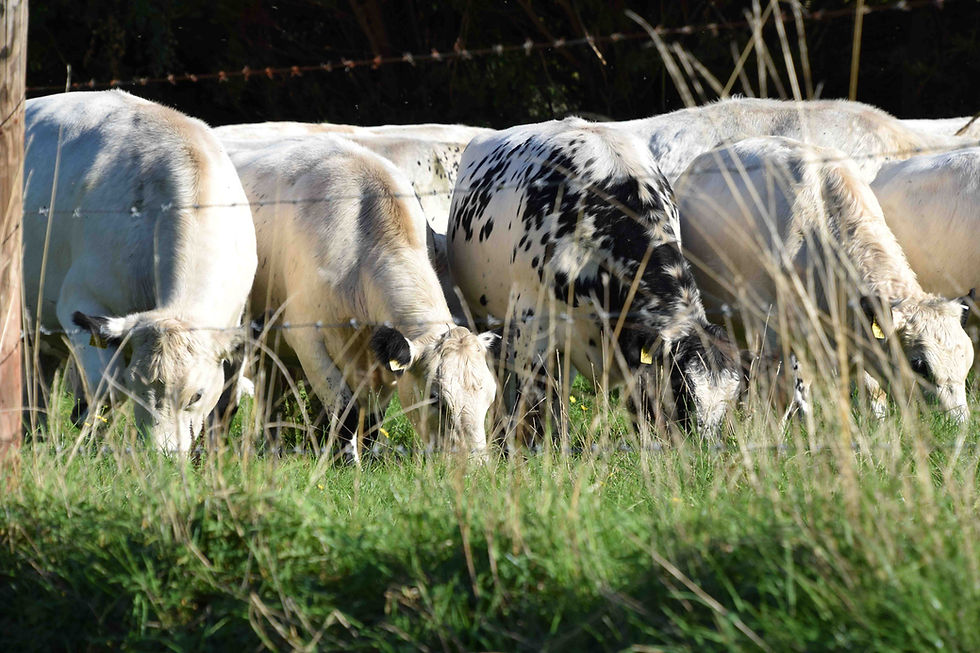
As a relatively rare breed – British White cattle currently sit in the ‘at risk’ category of the RBST Watchlist – the appreciation of its inherent grazing ability, strong maternal traits, and beef quality are key to strengthening numbers and taking the breed forward.
BWCS Breed Secretary Sarah Cook says: “The majority of new enquiries come to us with the priority of finding cattle which can manage pasture well and generate a high-quality beef product on top. The feedback we often get from recently joined members is that the Society always has plenty going on, which is a great compliment. We may only be a small group compared to some, but we hold ourselves to high standard when it comes to our membership services.

“We’ve held flagship events in 2026 such as a tremendous National Show held at the Royal Three Counties, re-gaining classes at the Great Yorkshire Show, and a run of excellent Society sales held by Melton Mowbray Market for several years now, which have helped us promote the breed’s productive, grass-based traits to a wide audience.
“The next step for us is always to ensure that new members have the information they need to set up a successful herd, and that they can make plenty of contacts within the breed to source suitable cattle for their system and make good breeding decisions. We are lucky to have a superb membership network who work hard for the future of these cattle, plus the systems we have put in place to ensure its continued development.
“The focus of our committees is on maintaining the quality of the breed top to bottom, and that the unique traits of British White cattle are consistent throughout. Schemes such as the NBDC’s Beef Type Classification and the Society’s own young bull inspections are allowing us to collect data on structural correctness, frame score, and weight for age, whilst the Grassroots online database system collects birthweight and calving ease data at registration. This information has been beneficial not only to promote the breed to new customers, but also for use in educational material for our existing breeders.
“The breed is in an excellent place right now, and the number of new and growing herds is encouraging to see. I’m looking forward to seeing what progress could be made over the next few years, and how we can keep building on this recent momentum. My focus will be on ensuring that our members have all the resources needed to produce good quality cattle for breeding and for sale, and on broadening our network even further.”

British White cattle are well-known for their talent at rearing calves to a high weaning percentage, the cows being milky and productive as well as being naturally easy calving, all thanks to their heritage as park cattle. Early keepers of these cattle allowed them to display their natural aptitude to producing quality beef and milk from grass, without following any particular breeding or production trends to alter them from their natural state, leaving us with the intrinsically milky and easily kept British White cow of today.
Many aspects of the breed allow for ease of management, from their ability to thrive on poor-quality grazing and forage, to their naturally polled head. The breed is also well-known for its tough black skin around the eyes, nose, and ears, as well as having hard black hoof tissue, all of which reduces incidences of eye and skin problems and lameness.


This content gives a useful introduction and keeps the language easy for readers. I spent time with Crazy Ball 3D Online and enjoyed improving my distance. Each run offers another chance to learn the track, collect more diamonds, and handle faster sections with better control.