
Breed Statistics, calculated Jan 2026

Data shown in these analyses is taken from the latest BWCS survey, completed on 31 Dec 2025.
Registered Females | 2383 |
Registered Bulls | 105 |
Bull Registered Peninding Inspection | 53 |
Birth Notified Bulls | 40 |
AI Sires Available (non-live) | 20 |
These figures include all live, registered or birth notified bulls and females, residing in current members’ herds at the time of calculation. Live registered animals sold outside of members’ herds are not included here, as this data is not fully available.
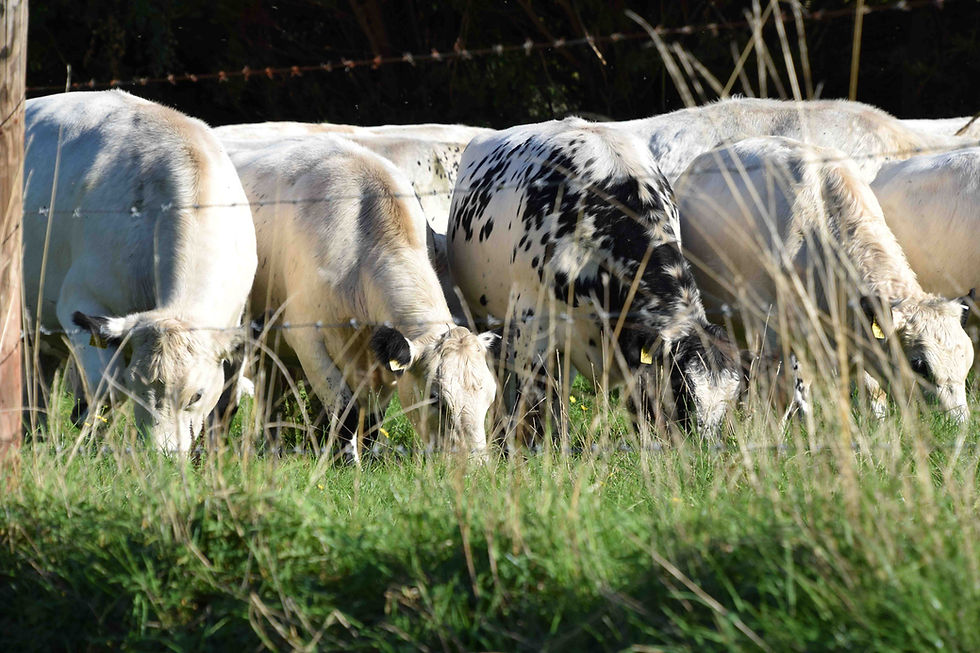
Of the 2383 registered females on the database, approximately 2000 of those would be of breeding age for the Spring/Summer 2026 bulling season. 105 bulls were fully registered and available for immediate use in 2026, with a further 93 young bulls either registered pending inspection or birth notified, and able to be inspected for full registration in 2026/27. A further 20 registered sires born between 1978 and 2012 had semen in storage.

Updated herd size information now shows that 32% of BWCS membership is made up of non cattle-owning members. These comprise associate members in the UK and overseas, as well as a number of retired breeders. 36% of members own between 10 and 49 animals, a further 25% own between 1 and 9 animals, and just 2% of the membership own herds of over 100 registered/notified cattle.
KINSHIP
Mean IBC of current live population: 0.1056
With each ‘tidying up’ of the Grassroots Online database, we can then calculate the most accurate mean inbreeding coefficient (IBC) for the current live population, which can be used by members as a benchmark when making breeding decisions in the herd. General guidance for conservation breeding in rare breed populations is to try to use as many males as possible, not using too many offspring from any one male, and ideally selecting only matings with a kinship score lower than the mean IBC for the live population. By applying this advice to our breeding programs, we continue to work towards a breed-wide mean IBC of 10% (0.1000) or below, considered to be a suitable standard for pedigree populations.
A questions often asked by potential new breeders is “how easy will it be for me to find a bull that fits my requirements, which isn’t related to the females I buy?” Based on these recent calculations, we can see that the British White breed remains in a favourable position with a wide selection of good quality, unrelated bulls always available, plus a healthy number of future herd sires coming through the BWCS Bull Inspections Scheme each year.



There are some helpful observations throughout this post, especially for someone trying to understand the topic from the beginning. My search included joya 9, and this page offered relevant information. The article is written in a natural style, making it easy to read without losing focus.
This style of cheesecake is known for its deeply caramelized top and creamy interior, and the article does a good job of explaining why that happens. It points out that only a small amount of flour is used, which keeps the texture more like a custard than a firm cake. The description of the burnt exterior and the rich, almost smoky flavor is accurate for what you'd expect. For anyone who enjoys a less sweet, more savory dessert, this guide to a caramelized cheesecake is worth reading before you preheat the oven.
I enjoyed the way this topic is presented because it feels clear and natural. I spent some time playing Slope 2 and really liked the smooth controls and exciting pace. Every run gives you another chance to improve your score and sharpen your reflexes.
This article beautifully highlights. Read also: https://pasca.unair.ac.id/summer-school/
I’ve been looking into the current state of mobile software for UK players, and frankly, the "best" app usually comes down to stability rather than flashy interface updates. Most of these platforms, like GGPoker or PokerStars, offer relatively functional Android and iOS clients, but performance can vary depending on your device's optimization.
If you're trying to figure out which technical features actually matter—like RGN audits or withdrawal speeds—it's worth looking at the data. You can find more detailed technical breakdowns in this guide to see how these apps hold up under testing. From a skeptical perspective, the high traffic on GG is a plus for liquidity, though the "cluttered" UI remains a valid complaint. Meanwhile, 888 stays simple but lacks…